
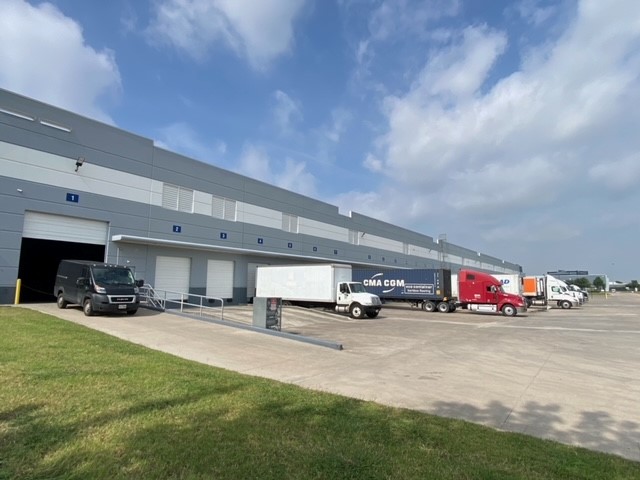
For supply chain directors managing retail distribution across the Texas Triangle, reducing inventory “dwell time” is the fastest way to protect profit margins.
When evaluating how to stage freight in regional hubs, the primary decision comes down to paying for traditional storage space versus investing in a high-speed transload operation.
Here is the quick, TLDR version of our answer:
If your inventory turnover ratio dictates that products move from inbound receiving to outbound shipping in under 48 hours, a cross-docking facility is the most cost-effective solution. It eliminates put-away labor and long-term holding costs. However, if your supply chain experiences unpredictable lead times, seasonal spikes, or requires safety stock to prevent stockouts, a traditional storage warehouse is essential.
Evaluate Which Model Fits Your Current Inventory Velocity
| Metric | Cross-Docking Facility | Traditional Storage Warehouse |
| Primary Goal |
Velocity and immediate distribution |
Buffer stock and inventory security |
| Avg. Dwell Time | 12-48 hours | Weeks to Months |
| Primary Costs | Transload labor (unloading/ redownloading) | Real estate (rack space) and put-away labor |
| Best Used For | Fast-Moving Consumer Goods (FMCG), perishables, pre-packaged retail fulfillment | Safety stock, seasonal inventory, bulk staging |
The “When to Cross-Dock” Flowchart
To determine if you should transition away from paying for rack space, apply this decision logic to your highest-volume SKUs:
Analyzing Your Inventory Turnover
- Step 1: Calculate Dwell Time. Do these specific pallets typically leave the facility within 48 hours of arrival?
- Yes: Proceed to Step 2.
- No: Stick with Traditional Storage.
- Step 2: Evaluate Predictability. Is consumer demand for this product stable, and are your inbound freight deliveries reliably on time?
- Yes: Proceed to Step 3.
- No: Stick with Traditional Storage to prevent line-down or stockout scenarios.
- Step 3: Assess Fulfillment Needs. Does the inbound freight arrive pre-sorted or ready for immediate final-mile delivery without complex kitting?
- Yes: Implement Cross-Docking.
Why High-Velocity Retailers in Texas Rely on Cross-Docking
Traditional warehousing involves receiving freight, moving it to a storage rack, picking it later, staging it, and shipping it.
Every touchpoint costs money. Cross-docking removes the middle steps. Inbound freight is unloaded, immediately sorted, and loaded directly onto outbound courier or freight trucks.
Expert Insight from Cardinal Delivery
Retailers often bleed margin on ‘dwell time.’ If a pallet of fast-moving consumer goods sits on a rack in our Houston facility for just three days before heading out to a retail store, the client is paying for put-away labor, rack space, and picking labor.
By shifting those specific high-turnover SKUs to a cross-docking model, we unload the inbound truck and immediately stage it for the outbound delivery. The freight never touches a rack, which practically eliminates storage and double-handling costs.
When Traditional Warehousing in Houston and San Antonio Remains Essential
While cross-docking is incredibly efficient, it is entirely dependent on perfect synchronization. If an inbound truck is delayed by weather, the outbound delivery trucks sit empty.
For businesses navigating complex manufacturing, unpredictable port schedules, or seasonal retail surges, traditional warehousing provides a mandatory safety net. Staging buffer inventory in Houston allows you to absorb supply chain shocks, while long-term storage in San Antonio ensures you have localized inventory ready to deploy into Austin or Dallas at a moment’s notice.
The Hybrid Approach: Combining Storage and Transloading
The reality of modern logistics is that you rarely have to choose just one model. The most resilient supply chains leverage both.
Expert Insight from Cardinal Delivery:
Very few supply chains are 100% cross-dock or 100% long-term storage. That’s why our San Antonio and Houston facilities are designed for hybrid operations. A client might bring in a consolidated trailer from Mexico where 70% of the goods are immediately cross-docked for retail distribution across the Texas Triangle, while the remaining 30% is moved to traditional racking as safety stock. We give them the agility of speed without sacrificing the safety net of reserve inventory.
We offer a robust infrastructure that supports both operations. Whether you need immediate cross-docking to push high-velocity retail goods into the market or secure, long-term storage warehousing in Houston and San Antonio to stabilize your inventory, our facilities adapt to your turnover rate.