
Does the Port of Houston Drayage or Mexico Nearshore Freight Offer a More Stable Inbound Route for Manufacturing Components In 2026?
For North American manufacturers, 2026 has presented a complex logistics dilemma. With global supply chains prioritizing regional stability, procurement directors are forced to weigh two heavily congested inbound routes: importing via ocean freight through the booming Port of Houston, or trucking components north from Mexico’s booming nearshore manufacturing hubs.
The Short Answer: Neither route offers perfect stability on its own in 2026. The Port of Houston offers massive capacity but faces tight drayage constraints and long ocean lead times. Mexico nearshoring offers incredibly fast transit times, but suffers from unpredictable border delays and severe driver shortages at the Laredo crossing.
The most stable strategy is a hybrid approach—routing bulk materials through Houston while utilizing San Antonio as an inland port for high-velocity cross-border freight.
Lead Time & Risk Assessment Matrix: Houston vs. Nearshoring
|
Logistics Metric |
Port of Houston (Ocean & Drayage) |
Mexico to US (Cross-Border Trucking) |
|
Average Lead Time |
25 to 40 Days (from Asia/Europe) |
2 to 5 Days (from Central Mexico) |
|
Primary 2026 Bottleneck |
Chassis shortages & high port volumes |
Customs delays & Mexico driver shortage |
|
Hidden Cost Risk |
Demurrage & detention fees |
Detention pay & erratic carrier rates |
|
Best Used For |
Bulk raw materials, heavy industrial equipment, safety stock |
High-velocity components, automotive parts, electronics |
The Port of Houston Squeeze: Record Volumes and Drayage Friction
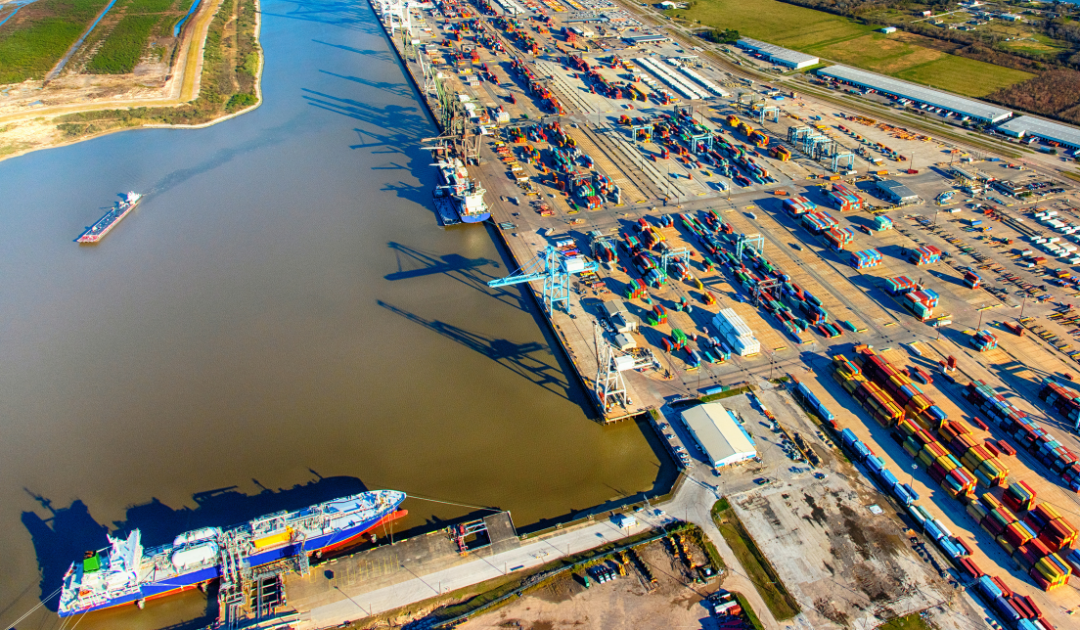
The Port of Houston is an economic powerhouse, consistently breaking tonnage records. In the first quarter of 2026 alone, the port handled over 1 million TEUs (Twenty-foot Equivalent Units). However, that unprecedented volume places an enormous strain on the local drayage network.
When your components land in Houston, the ocean journey is only half the battle. Pulling containers out of the terminal requires available chassis and drivers.
Expert Insight from Cardinal Delivery:
In the first quarter of 2026 alone, Port Houston topped 1 million TEUs. While that’s phenomenal for the regional economy, our clients feel the friction. Truck turn times stretch and chassis availability tightens. These are the times where a trustworthy partner is essential. If you don’t have a dedicated logistics partner ready to pull that container immediately and transload it at a local Houston warehouse, demurrage and detention fees can erase your ocean freight savings.
The Nearshoring Bottleneck: Cross-Border Delays at Laredo
On paper, nearshoring is the ultimate solution: manufacture goods in Monterrey or Saltillo and truck them into Texas in under 48 hours. However, the reality of 2026 cross-border logistics is much more volatile.
Because so many companies have shifted production south, the U.S.–Mexico border is under immense pressure. The Laredo crossing handles tens of thousands of shipments weekly.
Expert Insight from Cardinal Delivery
Everyone talks about nearshoring transit speed, but they underestimate the friction. The driver shortage in Mexico—currently sitting at nearly 28,000 open positions—creates erratic capacity.
Plus, the sheer volume of trucks hitting the Laredo and Colombia Solidarity bridges means even a minor paperwork error can result in a 24- to 36-hour delay. The true hidden cost is blown delivery windows for assembly plants on the US side.
Evaluating Lead Time and Risk for 2026 Manufacturing
Choosing between these routes depends entirely on your production schedule and risk tolerance.
If your manufacturing facility requires precision “just-in-time” delivery, relying solely on ocean freight through Houston exposes you to massive geopolitical and maritime delays. Conversely, relying 100% on a single land border crossing in Laredo leaves you highly vulnerable to localized traffic gridlock, sudden USMCA compliance audits, or carrier shortages.
The Hybrid Approach: Utilizing Houston and San Antonio Hubs
In 2026, a single-lane inbound logistics strategy is a liability and an operational risk. The most resilient manufacturing supply chains are adopting a hybrid model.
Expert Insight from Cardinal Delivery:
We tell clients to diversify. Bring your bulk, less-time-sensitive components through the Port of Houston, and run your critical, high-velocity parts up from Mexico through our San Antonio cross-dock. By having Cardinal Delivery manage warehousing in both nodes, you have a shock absorber for your supply chain regardless of which route gets congested.
Get the exact infrastructure needed to execute this dual-route strategy. We offer port-adjacent warehousing and drayage services in Houston to quickly secure your ocean freight, alongside a high-velocity fulfillment hub in San Antonio to catch and distribute your cross-border shipments the moment they clear Laredo.
Contact Cardinal Delivery today to build a diversified, resilient inbound freight strategy for your Texas manufacturing operations.